Science Café. Click wisely – how we think and what we believe online
07-01-2026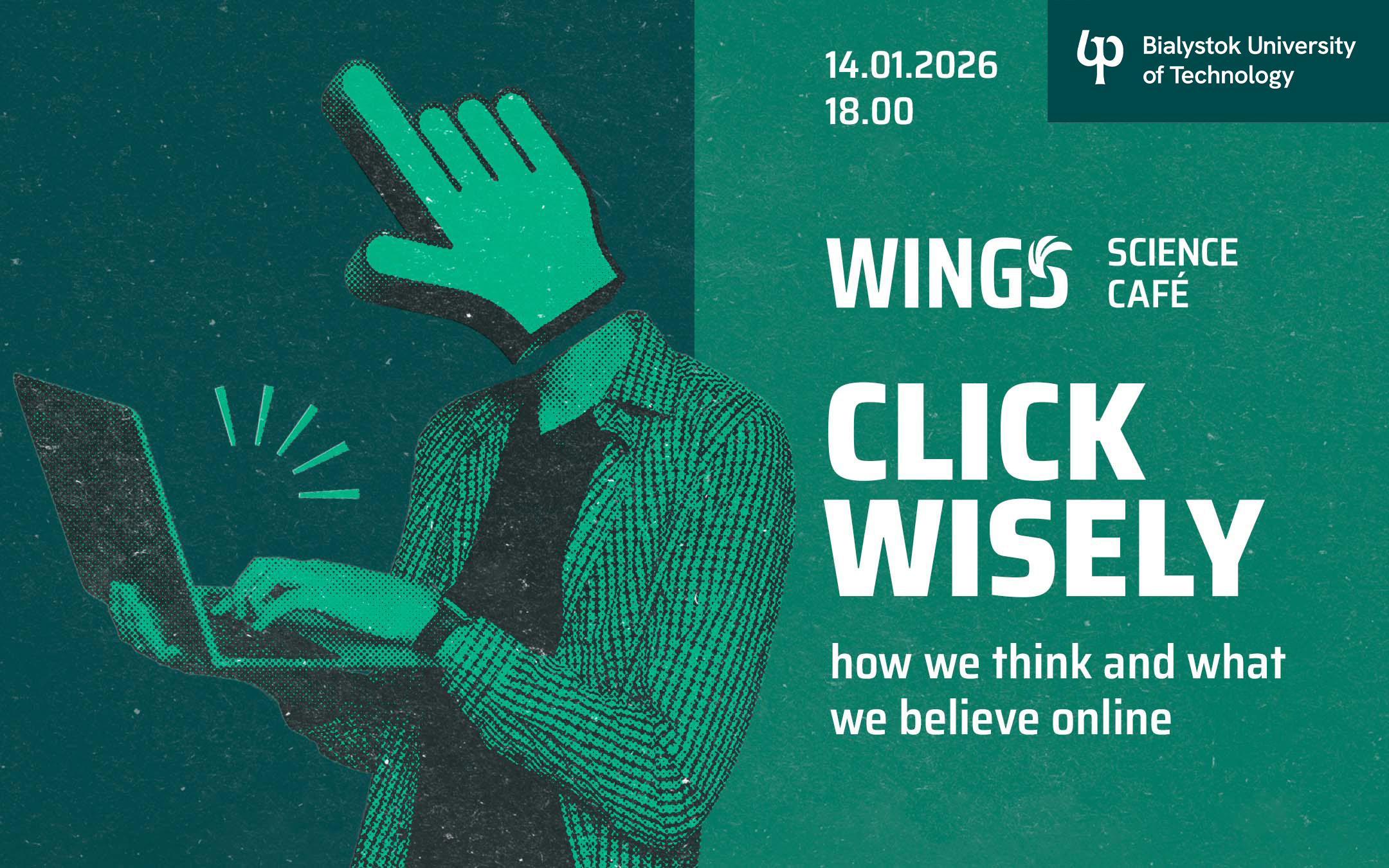
The Science Café of Bialystok University of Technology invites you to a meeting entitled “Click wisely – how we think and what we believe online”, devoted to disinformation and the threats it poses.
At the Fama Café in Białystok, in a relaxed atmosphere, we will talk about the plague of disinformation and how to stop it. Our guides will be Anna Mierzyńska, social media analyst and trainer, and Mateusz Zadroga, Editor-in-Chief of the Fact-checker portal, analyst and trainer.
You are welcome!
Science Café – “Click wisely – how we think and what we believe online”.
14 January 2026 (Wednesday), 6:00 p.m.
Fama Café, Białystok, 5 Legionowa Street
Free admission.
Attention! The first 50 participants will receive a voucher for a non-alcoholic beverage.
The programme includes two fascinating lectures:
“Why does disinformation work?”
Speaker: Anna Mierzyńska
Disinformation is currently a constantly growing information threat that may have a negative impact on the life of every internet user. It is worth asking ourselves why disinformation works on us at all. What makes many people accept false information as truth without reflection? Are we responsible for this, or should we not blame ourselves? And what can we do to change this situation to our advantage?
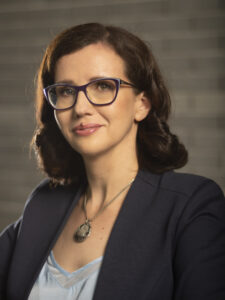
Anna Mierzyńska is a social media analyst and trainer. She specialises in the analysis of information threats, especially Russian disinformation in Poland, fake news and online manipulation. Author of the book “Efekt niszczący. Jak dezinformacja wpływa na nasze życie” on the social impact of disinformation (2022). Author of the guidebook “Dezinformacja. Jak się przed nią chronić”, published by the Orange Foundation (2022). Member of the Programme Council of the Orange Foundation. Author of an expert report on disinformation surrounding the crisis on the Polish–Belarusian border (2024), prepared for the governmental Commission for the Examination of Russian and Belarusian Influences in the years 2004–2024. Regular contributor to the news portal OKO.press.
In 2019 and 2020, she cooperated with the London-based Institute for Strategic Dialogue, among others by participating in a project monitoring disinformation on social media during the campaign ahead of the elections to the European Parliament. In 2023, she carried out the international monitoring project The Polish Watch together with the Atlantic Council DFR Lab and the Alliance4Europe think tanks. In 2024, she implemented a project monitoring disinformation during the campaign for the European Parliament for the Łukasiewicz Research Network.
Initiator of the project and co-author of the report “Countering disinformation in Poland – systemic recommendations”, carried out in 2023 by the Forum for Security Foundation, in cooperation with nearly 40 experts researching disinformation in Poland.
In 2025, she implemented training projects:
- The project “Wnikaj, nie klikaj”, building resilience to disinformation, addressed to students of upper secondary schools and final grades of primary schools, under which she trained approximately 3,000 students across Poland.
- A training project for journalists on countering electoral disinformation, implemented by the Zamenhof Institute Foundation.
“The first line of defence against disinformation — recognition, counteraction, prevention”
Speaker: Mateusz Zadroga
How to recognise disinformation? Can simply not sharing questionable content stop it? What steps should be taken to identify whether a source is reliable? These and other practical tips will be discussed during the presentation. Mateusz Zadroga will also discuss steps that can be taken to stop the spread of false content and how to quickly and easily identify whether a source is trustworthy. He will also present the InfoTester project, under which artificial intelligence and a methodology for verifying disinformation have been developed for years.
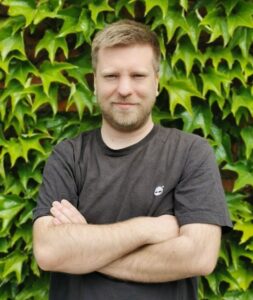
Mateusz Zadroga is a graduate in History from Cardinal Stefan Wyszyński University in Warsaw. He has been working with FakeNews.pl since December 2020, and since March 2025 as Editor-in-Chief of the portal. Fact-checker, analyst and trainer. He specialises in historical and military topics, Russian disinformation and the activities of conspiracy theory movements. In the years 2021–2022, he worked as a disinformation detection specialist at the Polish-Japanese Academy of Information Technology. Since April 2024, he has been leading the work of an expert team at PJATK on the development of artificial intelligence tools facilitating the detection and verification of disinformation. He is also the author of several reports published by universities and international organisations.
The Science Café, organised by the Faculty of Computer Science of Bialystok University of Technology, is held as part of the project “WINGS PB – Support, Integration, Learning, Guarantee of Success with BUT” (contract No. FERS.01.05-IP.08-0017/25-00), implemented under the European Funds for Social Development 2021–2027 programme, co-financed by the European Social Fund Plus.
Prepared by Katarzyna Kozioł
